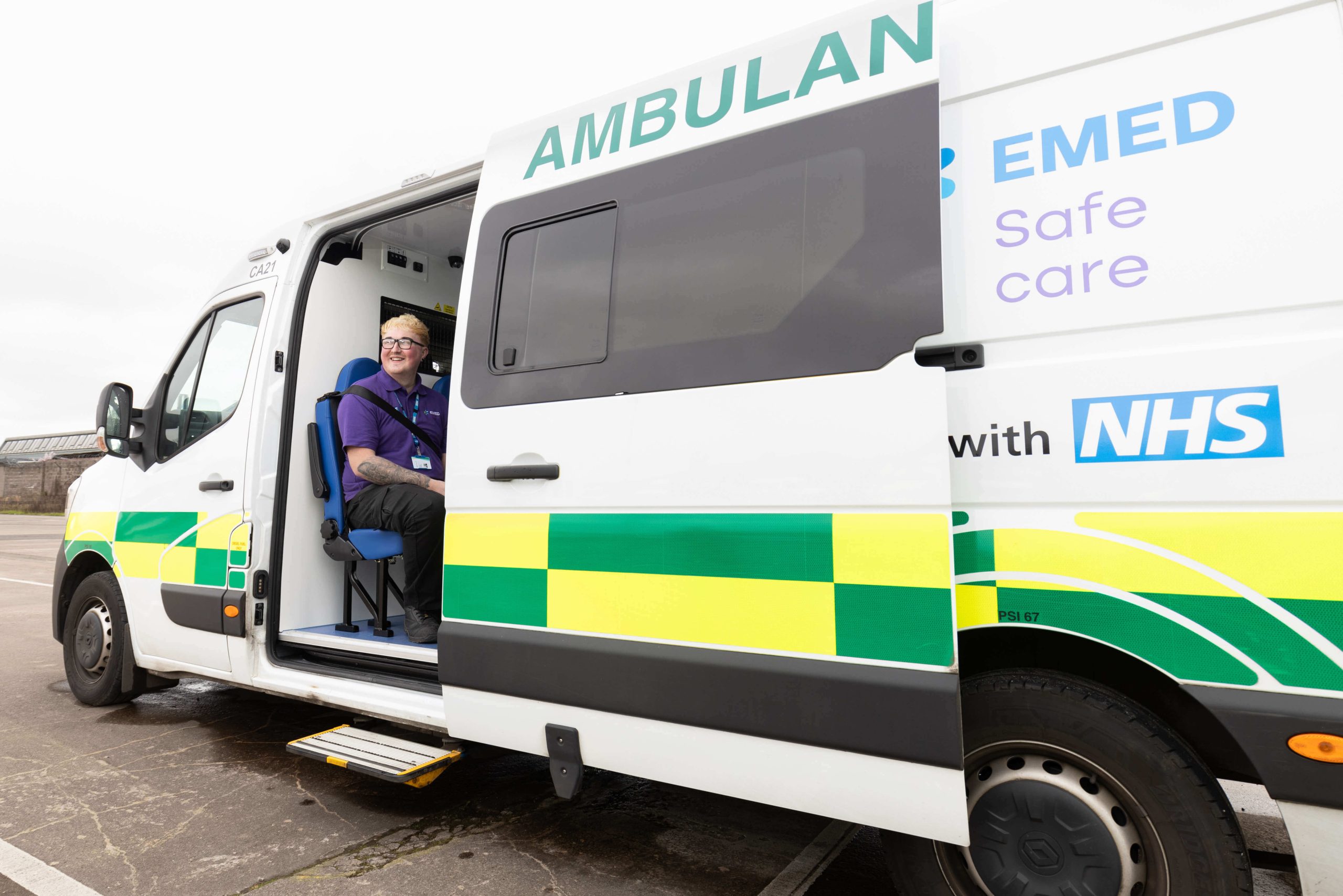
Understanding the patient groups who rely most on patient transport…
Across non-emergency patient transport services, thousands of journeys take place every day.
Each journey is different, shaped by the individual needs of the patient and the care they are travelling to receive.
However, when we step back and look across the service as a whole, it becomes clear that many of those journeys relate to a number of patient groups whose needs and experiences shape a significant part of what we do.
Understanding those journeys more deeply is something we are increasingly focusing on at EMED.
Listening to the experiences behind the journeys
For some patients, transport is not a one-off journey – it may be part of a regular treatment pathway, a long-term condition or a particularly difficult stage of life. For others, the journey itself can create anxiety or uncertainty, particularly when health conditions affect communication, cognition or mobility.
These are the moments where thoughtful planning, clear communication and reassurance can make a meaningful difference.
By taking time to understand the lived experiences behind these journeys, we can begin to identify small but important improvements that support patients more effectively.
Five groups whose journeys often shape the service
As we have started exploring this work, a number of patient groups have emerged whose journeys frequently feature across patient transport services.
These include people attending regular treatment, those living with cognitive conditions, individuals experiencing neurodiversity, patients receiving cancer treatment and people approaching the end of life.
Each group may experience transport differently and each brings important insight into how services can be designed to feel more supportive, predictable and dignified.
We are still at an early stage of this work, but understanding these experiences is an important step in ensuring that services continue to evolve around the people who rely on them.
Working with partners to learn more
To support this learning, we are beginning to have deeper conversations with patients, carers, community partners and national charities who work closely with these groups. These organisations bring invaluable expertise and lived experience, helping us better understand the challenges patients may face when travelling to appointments or treatment.
By working together, we can begin to identify practical improvements that support patients throughout their journeys.
Learning from lived experience
Ultimately, patient transport is about more than getting people from one place to another – it is about ensuring that journeys to care feel safe, respectful and well supported. By listening carefully to patients, carers and partners, we hope to continue learning how services can adapt to meet the needs of the people who rely on them most.
This work is still evolving, but it reflects something important to us as an organisation: ensuring that patient voices remain central to how services develop in the future.