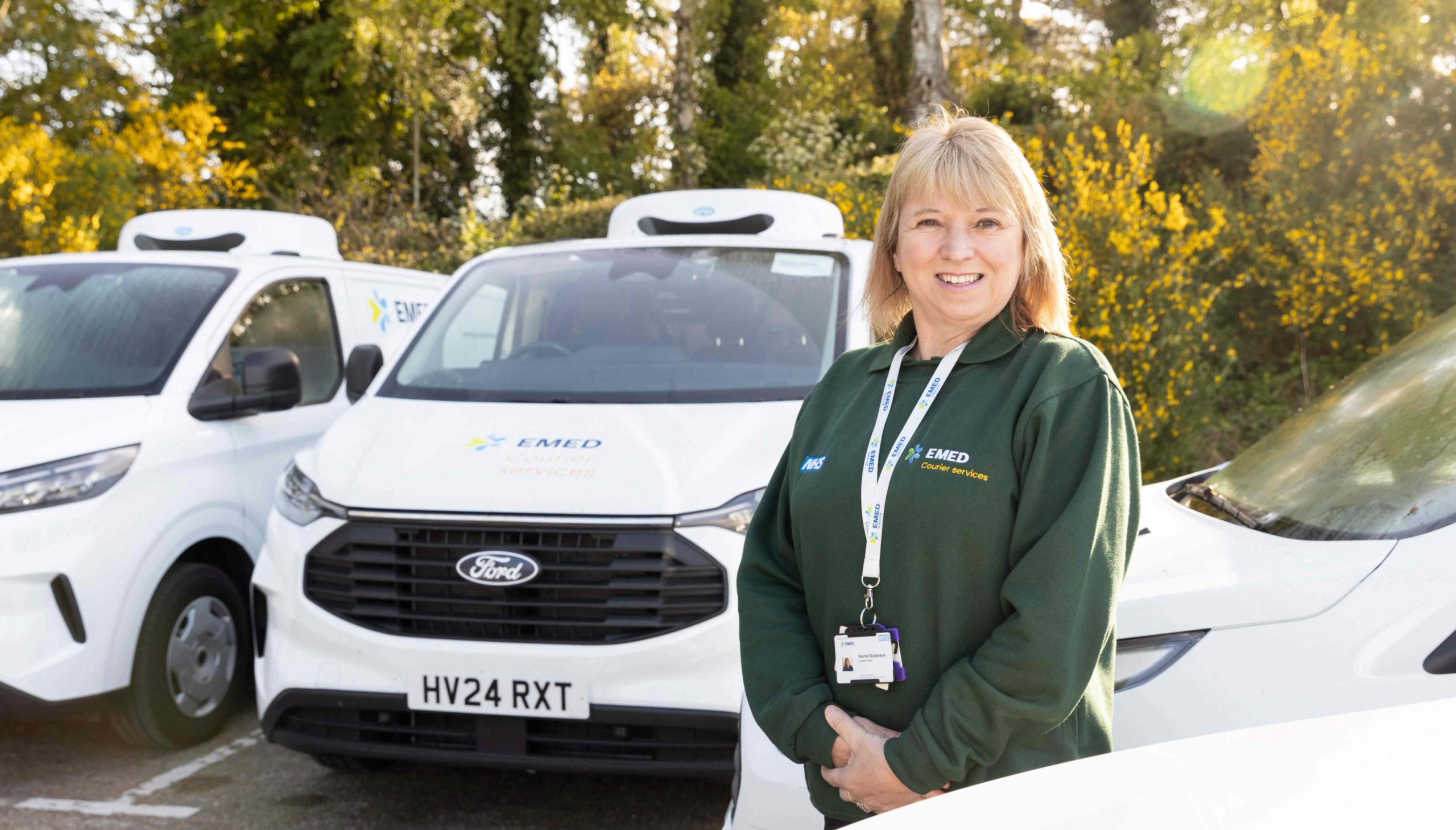
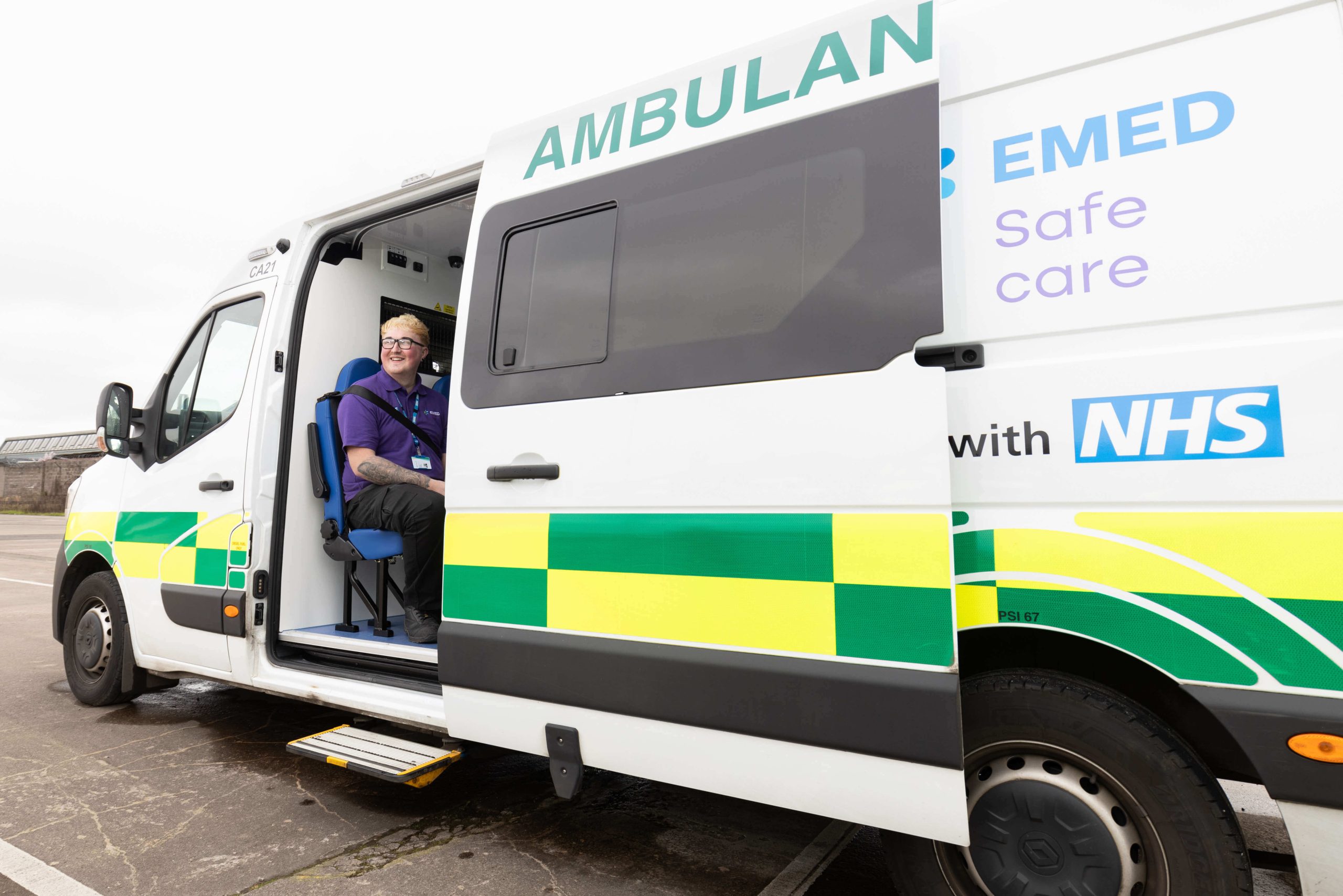
We chatted with Zara Perrett, who came to EMED Group at the next stage of her career behind the wheel. Her career has included being an emergency medical dispatcher for the South Western Ambulance Service (SWAST), an on-the-road HCA in Somerset, and even driving tankers. Now a Lead Driver in EMED’s Community Care division on the WESTlink service, Zara details her “thoroughly enjoyable” work in Demand Response Transport, where no two days are the same…
What made you switch to your Community Care role at EMED?
The main thing that attracted me to EMED was that it combined all my previous roles. So, not only have I done the community work, but I’ve also done the HCA work, and with my bus and lorry licenses – DRT is a combination of it all. So, not only could I still use my bus license, but I was also using my experience and the skills I had gained in the community.
Which core skills do you bring to this role?
My background knowledge of medical conditions, how to use healthcare equipment like various types of wheelchairs, and my ability to deal calmly and compassionately with situations that might occur are important.
What kind of passengers are you carrying on a day-to-day basis?
The general public, those with health issues and wheelchair users. We do school runs, too.
What sort of training did you have when you joined EMED?
We did a three-day induction course, which was an introduction to the company and its policies. We also got to know some of the management in the division and the broader company. We also did a first aid course. When we got into the bases, we buddied up with an existing DRT driver, who showed us the systems and, specifically, the PDA that gives us our daily journeys. We learned how the ticket machines work and familiarised ourselves with the different types of vehicles – we operate both coach-built sprinters and minibuses.
What do you enjoy most about working for Community Care?
Every day is different and presents a new challenge. It’s about finding ways to deal with things and learning new skills, especially now that I am in the Lead Driver role. I don’t own a computer and haven’t used one for about ten years, so it’s a steep learning curve! Learning from my colleagues is cool, too, as is learning how Excel spreadsheets work. I think I am getting into the swing of it now. There’s a lot of data transfer in the Lead role, and I’m gradually getting to grips with it.
So, what are the top skills for the role?
You need to be a very good listener, have good people management skills, and handle situations like if someone’s a bit upset about something or just needs to vent. You need to be there as someone they can open up to. There’s coaching, mentoring, and guiding in the role of Lead Driver, too.
It’s just the way you deal with these situations. You don’t want to escalate anything – you want to keep everyone level-headed, get them to understand what you expect from them, and keep everyone happy in their roles.
And what is the most challenging aspect of the job?
For me, it was the computer side of it. As a Lead, it was just an unbelievable amount of data, which I was not expecting. Learning how to use all the different programmes we use was a challenge. Even today, we’re still learning new things, especially with the new Timegate system.
What is the team like in Community Care?
I think we are a really good team. We all communicate well with each other. Again, there are good days and bad days, but overall, whether out on the road or in the office, we know what is expected of us and work together to make it happen.
What’s your typical day like?
So we come in in the morning. If we are doing a morning, we obviously have to get in before the drivers do to open up the building and check the runout. Then, as drivers come in, we may have to make changes there, especially if there are vehicle defects. We rotate vehicles and communicate with Paul, who deals with our fleet, so if there’s a defect, it can be fixed there and then.
I also look after new starters – organising shadow shifts and ensuring that people are paired with someone suitable. As the morning progresses, more and more drivers come in and go out on the road. Then I am straight back on the computer, gathering all the data from the day before and filling in all the spreadsheets so all the data is there. Everyone knows what’s happened the day before. Then, I will start working on more data for compliance. We have to keep on top of vehicle license checks, driving hours, and all that sort of thing.
What excites you most about the work?
I love challenges and learning new skills, especially since my promotion. EMED is the first company I can say that is giving me opportunities to progress.
If you knew someone interested in working in Community Care at EMED what would you tell them?
They need to be aware that we work 12-hour shifts four days a week – it’s a long day but time goes quickly because it’s so busy. We have our breaks, but they aren’t in staff rooms if we are driving – they are at suitable locations with facilities near our next jobs. You have to be flexible, and it’s best to bring a packed lunch!
Zara is a Lead Driver working on EMED Group’s Community Care division’s WESTlink service, serving the community with Demand Response Transport throughout the city. A single fare for any journey length within the operating zone is £2 for an adult and £1 per child and journeys can be booked by phone, through the website or through a free app. The service is available on demand or can be booked the day before travel.